

Running, leaking, or clogging toilets fixed fast, with clear options and upfront pricing
Indianapolis Storm Damage Roofing: Inspection, Claim Help, and Honest Answers
After a bad storm, the last thing you need is a contractor who shows up, slaps a tarp on, and disappears. We stay involved from the first inspection through your final repair or replacement — and we'll tell you the truth about what your roof actually needs, whether that's a full replacement or nothing at all.
What Hail and Wind Actually Do to an Indianapolis Roof
Indianapolis sits in one of the most active storm corridors in the Midwest. Spring and summer bring hail events that can strip granules, crack shingles, and compromise the waterproofing layer of your roof without leaving damage obvious from the ground. Wind damage is often subtler — lifted edges, broken seals, and missing shingles that look minor but let water in with every rain that follows.
Signs Your Roof Took a Hit — and What to Look For
You don't need to climb on your roof to spot the warning signs. Here's what we look for after a storm, and what you can check from the ground or inside your home.
Hail Damage Signs
Hail leaves circular impact marks on shingles — sometimes dark, sometimes shiny where granules have been knocked loose. Check your gutters and downspouts for granule buildup after a storm. Dented gutters, cracked ridge caps, and bruised shingles are common hail damage indicators that only a trained eye will catch from roof level.
Wind Damage Signs
High winds pull at the weakest points: edges, ridges, and any shingles that were already aging or improperly sealed. Missing shingles are obvious, but lifted or creased shingles are just as serious. Once the seal breaks, water finds a way in — often long before you see a stain on your ceiling.
Interior Warning Signs
Water stains on ceilings or walls, damp insulation in the attic, and daylight visible through the roof deck are all signs that storm damage has already allowed water penetration. If you're seeing any of these after a recent storm, don't wait — the longer water sits, the more damage compounds.
What the Storm Left on the Ground
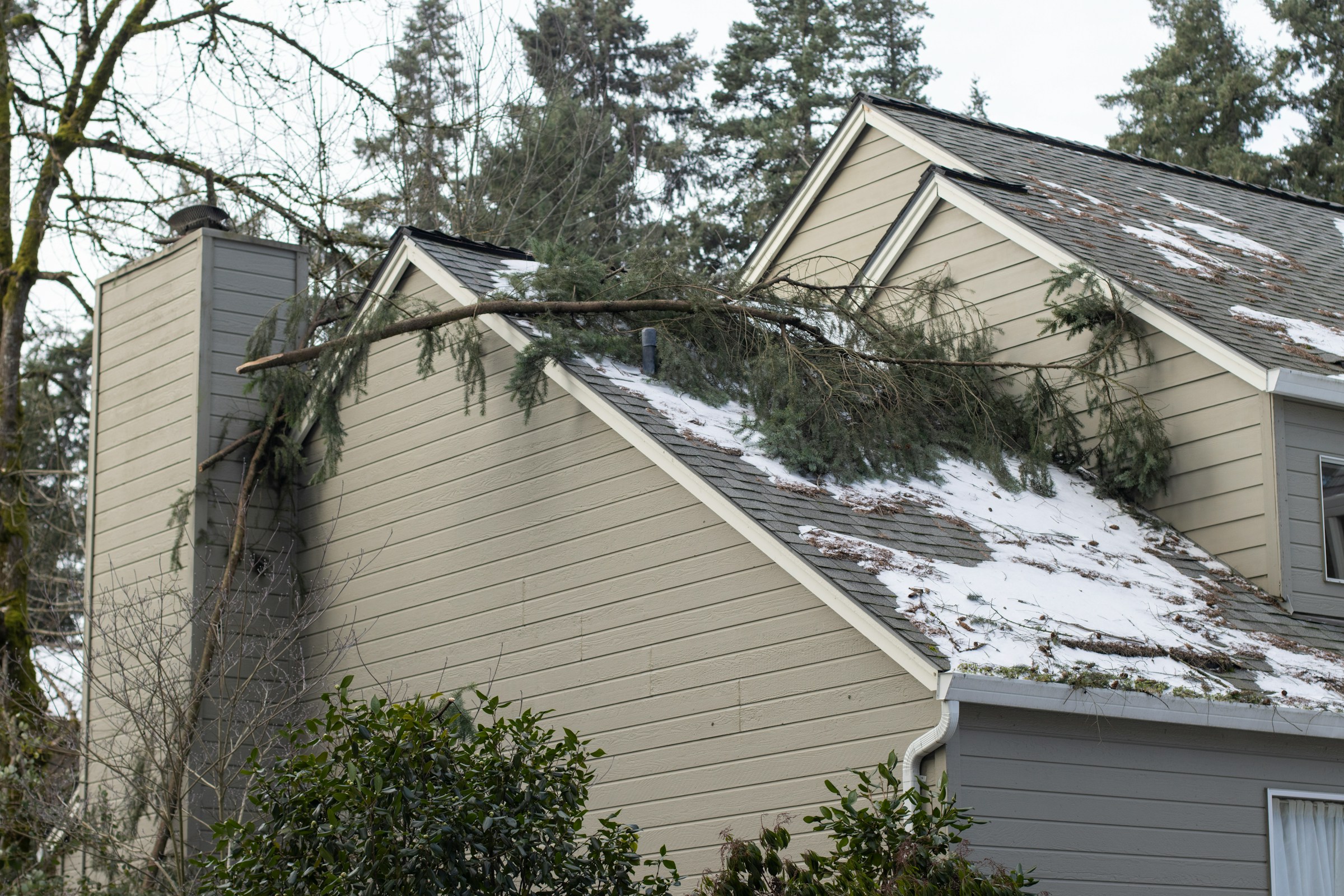
Granules in the gutters, shingle fragments in the yard, and dented or cracked vent covers are all evidence worth documenting before you call your insurance company. Take photos of anything you find at ground level immediately after the storm — that documentation matters when a claim is filed.
When You're Just Not Sure
This is the most common situation we hear: "The storm came through, but I don't know if it actually hit my roof." That's exactly why we offer storm damage inspections. We get on your roof, look at every surface, and give you a straight answer — no pressure, no upsell if there's nothing to find.
How the Roof Insurance Claim Process Works
Navigating a storm damage insurance claim feels complicated, but it follows a predictable sequence. Here's how we guide Indianapolis homeowners through it.
- Inspection and documentation. We inspect your roof and photograph every area of damage in detail. This documentation is the foundation of a successful claim — insurers need specific, organized evidence.
- Claim filing. You file the claim with your insurance company. We can walk you through what to say and what information to have ready before you call.
- Adjuster visit. Your insurer sends an adjuster to assess the damage. We're available to be on-site during that inspection so nothing gets overlooked.
- Scope of work review. Once the adjuster's report comes back, we review it with you. If the scope is incomplete or the settlement seems low, we can help you understand your options.
- Repair or replacement. Once the claim is approved, we complete the work — using your insurance proceeds, your deductible, and any upgrade costs you choose to add.
Why Homeowners Choose Malarkey and CertainTeed After Storm Damage
A storm replacement is also an opportunity to rebuild smarter. We carry Malarkey and CertainTeed shingles — two of the most impact-resistant product lines available to residential homeowners. Both manufacturers offer Class 4 impact-resistant options that can qualify you for an insurance discount on future premiums, depending on your carrier and policy.
If your roof is being replaced after a hail damage claim, it's worth asking us about upgrading to an impact-resistant shingle. The cost difference is often modest relative to the long-term protection — and in Central Indiana's storm season, that upgrade pays for itself.
We're Local — and That Matters After a Storm
Storm-chaser contractors follow severe weather events into markets they've never worked in, collect deposits, and move on before the job is finished or the warranty means anything. We've been serving Indianapolis homeowners since 2021, and we'll be here long after the storm season ends.
We're GAF certified and CertainTeed certified, carry the shingle lines we believe in, and have 95 Google reviews from real Indianapolis-area homeowners. When you call us after a storm, you're talking to a local crew that has a reputation to maintain in this market — not a crew that showed up because the radar looked profitable.
Emergency Roof Tarping After Severe Weather
If your roof has active damage and rain is in the forecast, a temporary tarp can prevent a bad situation from becoming a much worse one. We provide emergency roof tarping for Indianapolis homeowners when storm damage has left the roof exposed. This is a short-term measure — not a repair — but it buys time to complete a proper inspection, document the damage, and work through the insurance process without water damage compounding underneath.

Common Questions About Storm Damage Roofing in Indianapolis
How do I know if my roof was damaged by the storm?
The only reliable way to know is to have someone get on the roof and look. Hail damage and wind damage are often invisible from the ground. We inspect every surface and give you a straight answer — if there's no damage, we'll tell you that too.Does filing a storm damage insurance claim raise my rates?
In most cases, a weather-related claim is treated differently than an at-fault claim. Hail and wind are considered acts of nature, and many Indiana carriers do not surcharge for a single weather event. Your agent is the right person to confirm your specific policy terms before you file.What if the insurance adjuster says the damage is less than I think it is?
Adjuster estimates are not always final. If we believe the scope is incomplete, we can help you understand the dispute and supplemental claim process. Having detailed documentation from our inspection gives you a stronger position.How long do I have to file a roof insurance claim after a storm?
Most Indiana homeowner policies require claims to be filed within one year of the storm event, but policy terms vary. Don't assume you've missed the window — contact your insurer and check your policy, then call us for an inspection while the evidence is still visible on the roof.Can I use my insurance claim to upgrade to better shingles?
Yes. Your insurance proceeds cover the cost of replacing what you had with a comparable product. If you want to upgrade to a higher-grade or impact-resistant shingle, you pay the difference. We'll walk you through the options and what the cost difference looks like before you decide.
| Symptom | What it often means | What we typically do |
|---|---|---|
| Toilet keeps running | Worn flapper, fill valve issue, or incorrect tank settings | Replace/tune internal parts and confirm the toilet shuts off quietly |
| Weak flush or won’t flush fully | Partial blockage, low tank fill level, or worn flush components | Restore proper tank fill/flush parts and clear restrictions if needed |
| Toilet clogs frequently | Obstruction in the toilet or a restriction farther down the line | Auger and assess; recommend further drain evaluation if clogs persist |
| Water leaking at the base | Failing wax ring, loose bolts, or a flange/seal issue | Reset toilet, replace seal, secure mounting, and test for leaks |
| Gurgling or bubbling when flushing | Venting issue or main drain restriction | Check for drain/vent indicators and advise next diagnostic step |
| Toilet rocks or feels loose | Loose mounting or compromised seal | Stabilize mounting and address the seal to prevent hidden damage |
Start With an Inspection — We'll Take It From There
If a storm came through your area, get eyes on your roof before the next one does. We'll inspect it, document what we find, and give you honest guidance on whether a claim makes sense. No pressure, no manufactured urgency — just a straight answer from a local crew that knows Indianapolis roofs.